

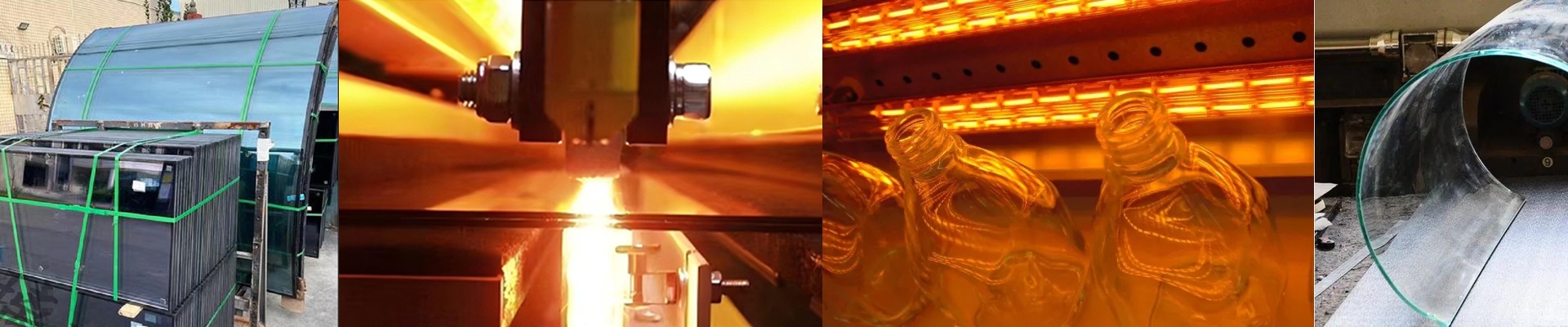

On the glass line, heat isn’t just temperature—it’s geometry, stress, and yield. A lagging ramp or a cold spot during tempering, bending, or EVA/SGP/PVB lamination can push the glass past its thermal limit. That’s how you end up with optical distortion, uneven curvature, or stress fractures that only show up later, in the field.
What matters under the hood
We run a modular infrared heating array with short-wave quartz emitters, putting radiant energy straight into the glass surface. Skip the air convection, and you skip the drift and gradients that come with it. The modules hit 600°C in 3–5 seconds, and the ramp is controlled so the thermal front moves evenly across the sheet. We hold temperature uniformity at ±3% across the active zone, and tune power density to 20–40 kW/m² depending on thickness and emissivity—thick low-e stacks get more density; thin clear glass runs cooler. Each module is rated for 240 V or 480 V, with quick-connect terminals and a standard mechanical footprint so it drops in and gets on with the job.
Why this plays where it counts
In tempering, the array gives you the fast, even surface heat you need to set the right thermal gradient before quench—less breakage, and better control over bow. In bending, the zoned layout lets you hit complex radii without torching thinner sections, so sag stays consistent part to part. In lamination, the array brings the stack into the EVA/SGP/PVB flow window quickly and repeatably. Cycle time drops, and you cut scrap from bubbles and voids. You end up with higher throughput, tighter repeatability, and lower specific energy use because the heat lands exactly where it’s needed.
The details that keep it honest
Installation is straightforward, but line layout matters. Clearance to the glass path and reflector geometry shape spot size and uniformity, so we size the array to the exact glass width and dwell profile. The emitters are tough, but they don’t like oil, dust, or solvent vapors. Keep the area clean, and make sure airflow isn’t blowing across the hot face. Plan on routine reflector inspections and emitter checks. When you keep up with maintenance, the modules run thousands of cycles with stable output and predictable life—so uptime stays predictable, too.