
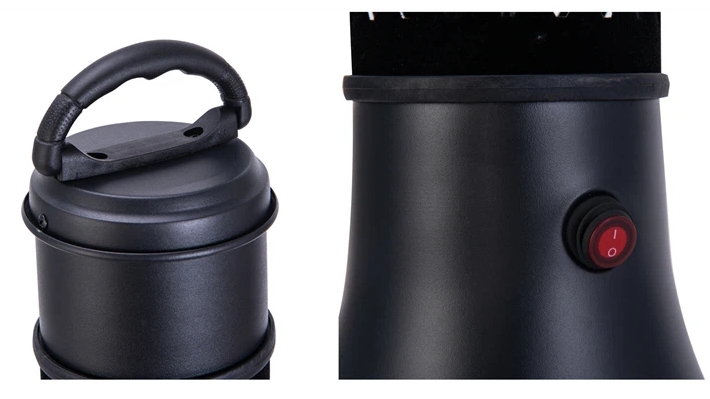
The Truth About Why Infrared Heaters Actually Break
Here is the thing about IP65-rated heaters: most of them don’t fail because the chassis is weak. They fail right where the wires enter the unit. In high-wattage infrared systems, that transition point is a nightmare. Heat doesn’t just stay at the element; it creeps backward along the wires. If your sealing is off, the insulation basically bakes. It cracks. Then it shorts out. Simple as that.
Why the “Standard” Way Doesn’t Work
A lot of shops just throw in a basic rubber grommet or a cheap silicone gasket and call it a day. But those materials can’t handle the constant expansion and contraction of thermal cycling. Eventually, the seal shrinks. That’s when moisture sneaks into the housing, hits the high-voltage terminals, and—pop—you’ve got an arc flash. We do things differently. We use OEM-grade sealing with high-temp fluoropolymers and precision-molded compression seals. It’s a bit more work, but it actually stays shut.
Dealing with the Heat
When you push an infrared heater to its limit, the inside gets scorching. Standard PVC or low-grade silicone jackets just soften and degrade under that kind of stress. That’s why we spec out wires with PTFE or cross-linked polyolefin jackets. They don’t melt. They don’t off-gas. And because the seal is airtight, we keep oxygen and humidity away from the copper leads, which stops them from oxidizing and rotting.
The Catch (Because there’s always one)
Getting a real IP65 rating means you lose a little bit of flexibility. Since the lead-out is hermetically sealed and rigid, you can’t just bend the wires whenever you feel like it during install. You’ve got to respect the minimum bend radius. If you kink the wire right at the entry point, you’ll break that vacuum seal, and you’re back to square one. But if you follow the spec sheet? You’re golden. These are built for industrial wash-downs and the kind of humid environments that kill most electronics. No more worrying about heat-induced shorts.