
Forget the Dimensions. Let’s Talk Power Density.
Most shops will ask you for a length and a diameter, throw some quartz together, and call it a day. But if you’re working with new glass materials or high-temp polymers, you know that’s not how the real world works. A uniform heat soak is fine for some, but usually, you’re looking for something more specific. You need those precise thermal gradients to see exactly where a material snaps or when it hits a phase transition.
It’s all about where the heat lands
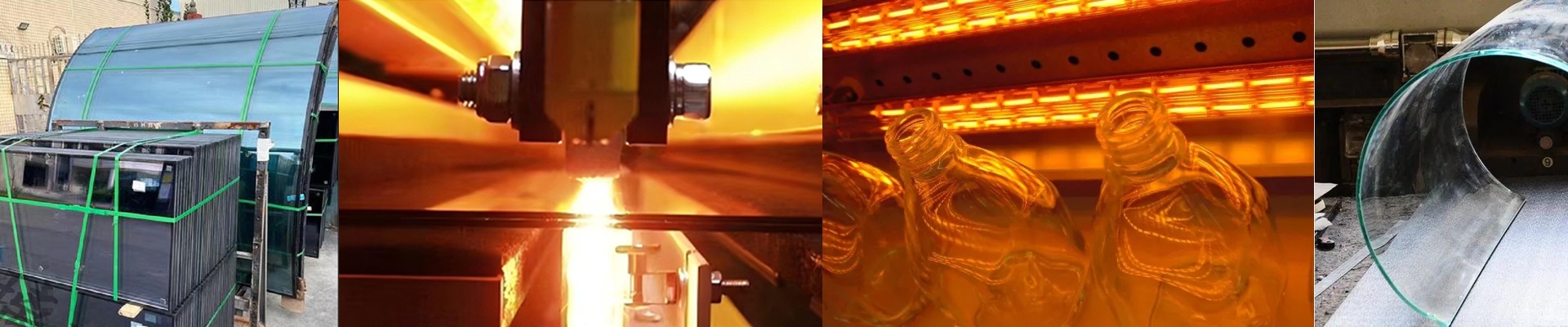
Power density isn’t just a number on a spec sheet. It’s about where that energy actually hits your target. By playing around with the filament winding and the thickness of the quartz wall, we can move the heat load exactly where you need it. Want a concentrated blast in the center that tapers off at the ends? We can do that. It lets you simulate a brutal stress test without having to tear apart and rebuild your entire furnace.
The give and take
We use high-purity fused quartz because it handles UV transmission and thermal shock like a champ. But there’s always a trade-off. If you push for extreme power density, you’re flirting with localized hot spots on the glass. Push it too hard, and you’ll either kill your lamp’s lifespan or risk a total blowout if your cooling air isn’t perfectly dialed in. It’s a balancing act between the wattage you crave and what the quartz can actually take.
No “off-the-shelf” headaches
When you’re in the R&D phase, the last thing you need is a part that almost fits. We give you total freedom with your parameters. If you’ve got a cramped test chamber or you’re stuck using a legacy transformer with a weird voltage, we’ll build to your schematic. No “standard lengths” allowed. We’ll hand over the raw heat flux data so you can just wire it up and get to work. No guessing. No hoping for the best. Just clean data and a tool that actually does what you need it to do.