
Getting Mid-Wave IR to Work in Mobile Glass Repair
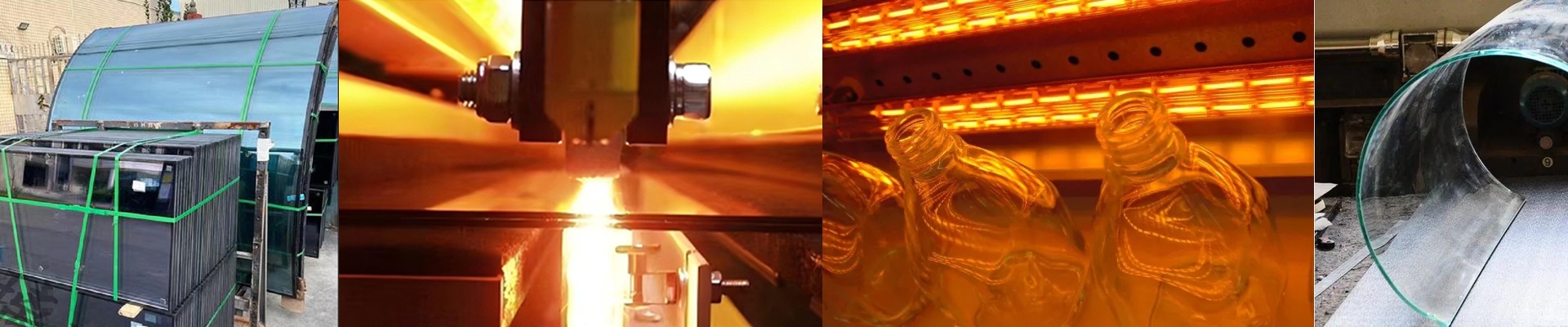
When you’re trying to cram high-output heating into a mobile glass repair bracket, you’re basically fighting for every single millimeter. You need enough heat to actually soften the resins and get the surfaces ready, but you’re stuck working with a tiny portable chassis and whatever voltage your mobile power supply can handle. It’s a tight squeeze. The struggle with power and space We use medium wave infrared (MWIR) lamps because they hit that sweet spot. They penetrate deeper than short-wave but aren’t as sluggish as long-wave. To make these fit into a miniaturized bracket, it all comes down to how much wattage we can cram into every inch of the quartz tube. The trick is tightening the coil winding and dialing in the voltage. If your voltage rail is limited, we have to get the filament resistance just right. That way, the lamp hits its operating temp fast—without popping a fuse the second you flip the switch. Dealing with the heat soak Here’s the thing: when you shrink everything down, you run into a heat soak problem. You’ve got a high-wattage element in a tiny box, so the heat doesn’t just hit the glass—it bleeds backward into the bracket. To stop that, we use reflective backing to force the radiation forward where it belongs. And for the love of everything, don’t use standard PVC wiring. It’ll melt. Period. We stick with high-temperature lead wires and nickel-plated connectors. Why? Because oxidation at the contact points is usually what kills these mobile units after a few hundred cycles. The trade-off There’s a catch, though. When you push more power through a smaller tube, the lamp runs hotter. That means it won’t last as long as a big, low-wattage tube would. It gets the job done, but you have to treat the lamp as a consumable—like a lightbulb that’s eventually going to burn out. Because of that, we make sure the bracket has a quick-swap mount. You don’t want your operator stripping the entire assembly just to pop in a new lamp. That’s just a waste of time.