
Dealing with Thermal Stress in Lab Glass
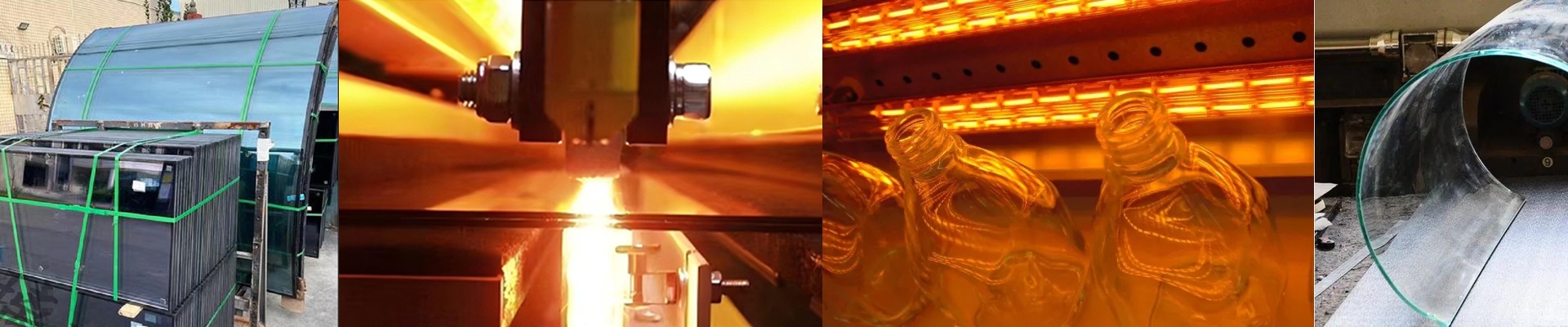
If you’ve ever spent time cutting or shaping borosilicate glass, you know the feeling. You finish a piece, it looks perfect, and then—crack. That’s internal stress talking. It’s basically a ticking time bomb inside the glass. If you don’t bleed that stress out through a proper annealing process, your vessel is just waiting for a reason to shatter. To stop that from happening, we use high-precision IR heating elements. But here is the secret: it’s not about just “getting it hot.” It’s about hitting a very specific temperature window and staying there. We’re talking 0.1°C precision.
Why glass snaps
Glass is finicky. It expands and contracts unevenly. If the outside cools down faster than the core, you’ve got a permanent state of tension locked inside the walls. To fix this, we bring the glass up to its annealing point. This is that sweet spot where the molecules can shift and relax, but the piece doesn’t actually start to sag or lose its shape. It’s a tightrope walk. A swing of just 1°C can be the difference between a flask that lasts a lifetime and one that explodes the first time it hits an autoclave.
The obsession with 0.1°C
We pair our IR elements with tight-loop PID controllers because standard heaters are too clumsy. They “overshoot.” When a heater jumps past the annealing point, you risk warping the glass. If it undershoots, the stress stays trapped. By keeping the variance to 0.1°C, we make sure the entire wall of the container reaches a total thermal equilibrium. Everything settles. Everything relaxes.
The trade-off
Now, you can’t have this kind of control for free. You have to give up some speed. You can’t just blast the glass with raw wattage if you want it to survive. We slow the heating rate down as we get closer to the target temperature to avoid thermal shock. And a quick heads-up: your sensors have to be just as accurate as your heater. If your thermocouple is off, the IR element is basically just guessing. The precision only works if the “eyes” of the system are calibrated to that same 0.1°C standard.